
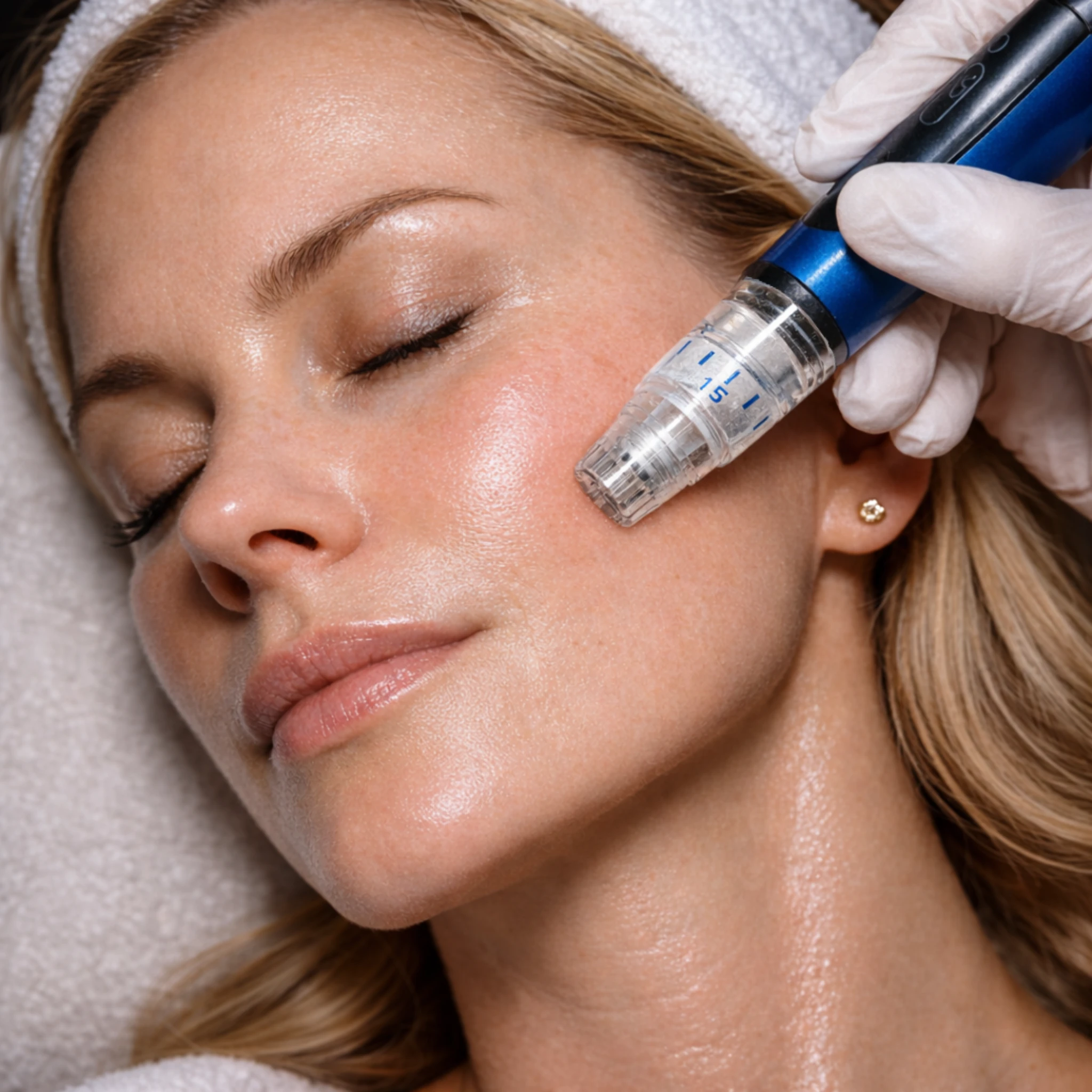
Creating tiny wounds to improve your skin sounds odd. Yet microneedling, also known as Collagen Induction Therapy, has become one of the most popular skin rejuvenation treatments available. The reason is simple: it works by triggering your body’s natural healing response.
Microneedling uses fine needles to create controlled micro-injuries in the skin, typically at depths of 0.5-2.5mm depending on the treatment area and concern being addressed. These tiny punctures trigger a three-phase biological response that your body uses to repair tissue damage.
The moment the skin is punctured, an immediate inflammatory response begins. Blood platelets gather at the injury sites and release growth factors, which are signalling molecules that attract immune cells to begin the repair process. These growth factors are chemical messengers that tell your body to start healing. This phase typically lasts for the first few days after treatment and is responsible for the mild redness you may experience.
During the proliferation phase, specialised cells called fibroblasts become active. Fibroblasts are the workhorses of skin repair. They produce new collagen and elastin fibres, the proteins that give skin its structure and elasticity. Collagen is what makes skin firm, while elastin allows it to stretch and bounce back. This phase also involves neo-vascularisation, the formation of new blood vessels that ensure adequate nutrient supply to the healing tissue. More blood vessels mean more oxygen and nutrients can reach the skin to support the healing process.
The remodelling phase is where visible improvements become apparent. The newly formed collagen network strengthens and reorganises, making the skin firmer and more resilient. This phase continues for months after treatment, which is why results develop gradually rather than appearing immediately. Your skin is literally rebuilding itself from the inside out.
The most significant outcome of microneedling is collagen induction, which is why the treatment is formally known as Collagen Induction Therapy.
A comprehensive review in the Indian Journal of Dermatology documented that microneedling can produce up to a 400% increase in collagen and elastin deposition at six months post-treatment. Histological analysis (studying tissue samples under a microscope) revealed neocollagenesis (new collagen formation) at depths of 5-600 micrometres beneath the skin surface. Neocollagenesis simply means the creation of new collagen where it was previously broken down or absent.
The treatment stimulates production of multiple collagen types (I, III, and VII) as well as elastin and tropoelastin. Importantly, the new collagen forms in a normal lattice pattern rather than the parallel bundles characteristic of scar tissue. This structural difference is what allows microneedling to improve existing scars while creating smoother, healthier skin. Normal collagen is organised in a criss-cross pattern that gives skin strength and flexibility, whilst scar tissue collagen forms in straight lines that are less flexible.
A 2024 comprehensive review confirmed these findings, noting that microneedling stimulates fibroblast activity and increases collagen and elastin production, the proteins essential for maintaining skin elasticity and firmness.
Standard microneedling protocols typically involve 4-6 sessions spaced four weeks apart. This interval allows each round of collagen remodelling to complete before the next treatment. Your skin needs time between sessions to complete the healing process.
A clinical study evaluating automated microneedling found that four treatments spaced four weeks apart significantly improved the appearance of facial acne scarring. Results develop gradually over the weeks and months following treatment, with peak improvement typically observed around six months post-treatment. This gradual improvement occurs because collagen production continues long after the initial treatment.
The benefits of a complete treatment course can last 12 months or longer. Many patients choose maintenance sessions once or twice yearly to sustain their results and continue supporting healthy collagen production.
The versatility of microneedling comes from its ability to stimulate the skin’s own repair mechanisms. Common applications include:
A 2025 narrative review examining the physiological mechanisms of microneedling confirmed that it is a minimally invasive procedure with low risk of post-procedural hyperpigmentation, scarring, or other adverse effects. The treatment is suitable for various skin types and has minimal downtime compared to more aggressive resurfacing procedures. Most patients experience mild redness for 24-48 hours before their skin returns to normal.
At Thriyv, we use the SkinPen for our microneedling service, one of the most advanced microneedling devices on the market. The SkinPen is FDA-cleared and offers precise needle depth control, allowing our practitioners to tailor each treatment to your specific skin concerns. This precision matters because different skin issues require different treatment depths.
Our trained practitioners assess your skin before creating a personalised treatment plan. We do not offer one-size-fits-all approaches. Microneedling can be recommended as a standalone treatment or as part of a comprehensive skin programme, depending on your goals and skin condition.
Our Manchester clinic specialises in skin rejuvenation, combining advanced technology with evidence-based protocols. We stay current with the latest research and clinical best practices to ensure you receive safe, effective treatments. Our team has extensive experience with microneedling across different skin types and concerns, from acne scarring to ageing skin.
We also provide thorough aftercare guidance to support your skin’s healing process and maximise your results. Proper aftercare is essential to achieving the best outcomes and preventing complications.
Microneedling works by harnessing your body’s natural healing response. The controlled micro-injuries trigger a cascade of biological processes that result in increased collagen and elastin production, the proteins that keep skin firm and elastic.
Clinical evidence supports significant improvements in skin quality, with studies documenting up to 400% increases in collagen at six months post-treatment. The treatment is safe, effective, and requires minimal downtime compared to more invasive procedures.
If you are considering microneedling, book a consultation at Thriyv to discuss whether it is right for your skin. Our Manchester-based practitioners will assess your concerns and create a personalised treatment plan based on clinical evidence and your individual goals.
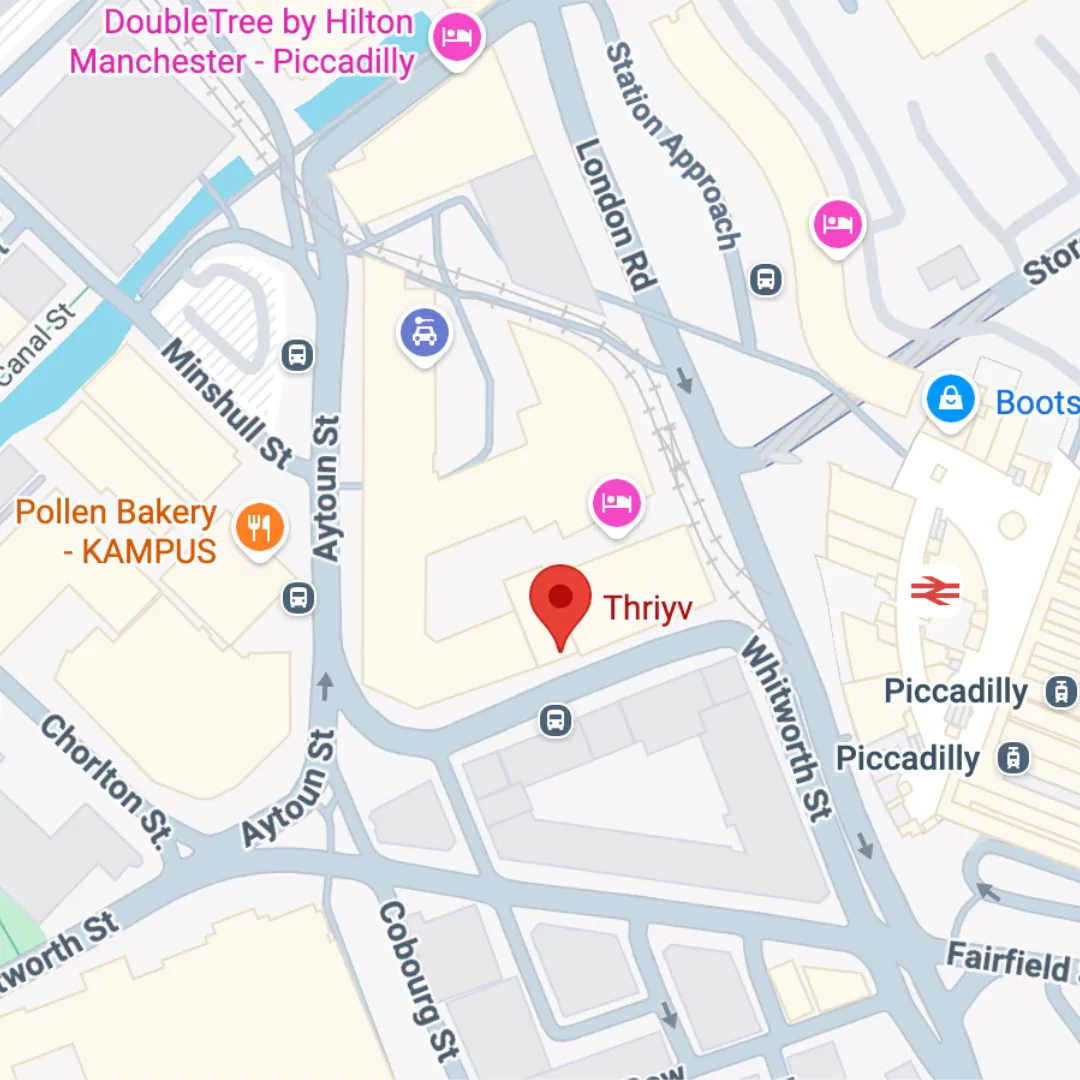
Thriyv Wellness & Aesthetics is located in the heart of Manchester City Centre, right between Manchester Piccadilly Train Station and Kampus.
We’re just a few moments walk from major rail, tram and bus hubs, with a multi-story carpark next door. This means its never been easier to start your journey at Thriyv, whether you’re based in Manchester City Centre or travelling from further afield.
Our full address is Thriyv, 14-16 Whitworth Street, Manchester, M1 3BS. See you soon!
Ready to take control of your aesthetic and wellness journey?
Thriyv, and our medical professionals, are ready and waiting to support you in reaching your goals.
To begin, book your next service/treatment below!
We get it. Sometimes you want to learn a bit more about a service without the hassle of an in-clinic consultation.
If you’d like to learn more about how Thriyv’s unified and complimentary services can help you achieve your goals, drop us a line via the form below. One of the Thriyv team will be back in touch with you as soon as possible!
Please note: Unfortunately from time-to-time, our correspondence can land in your spam inbox. To make sure we can answer your query, please consider saving info@thriyv.co.uk in your contacts, or remember to check your spam regularly!