
Written by Dr Callum Shields, MBChB Lead Clinician at Thriyv, Manchester
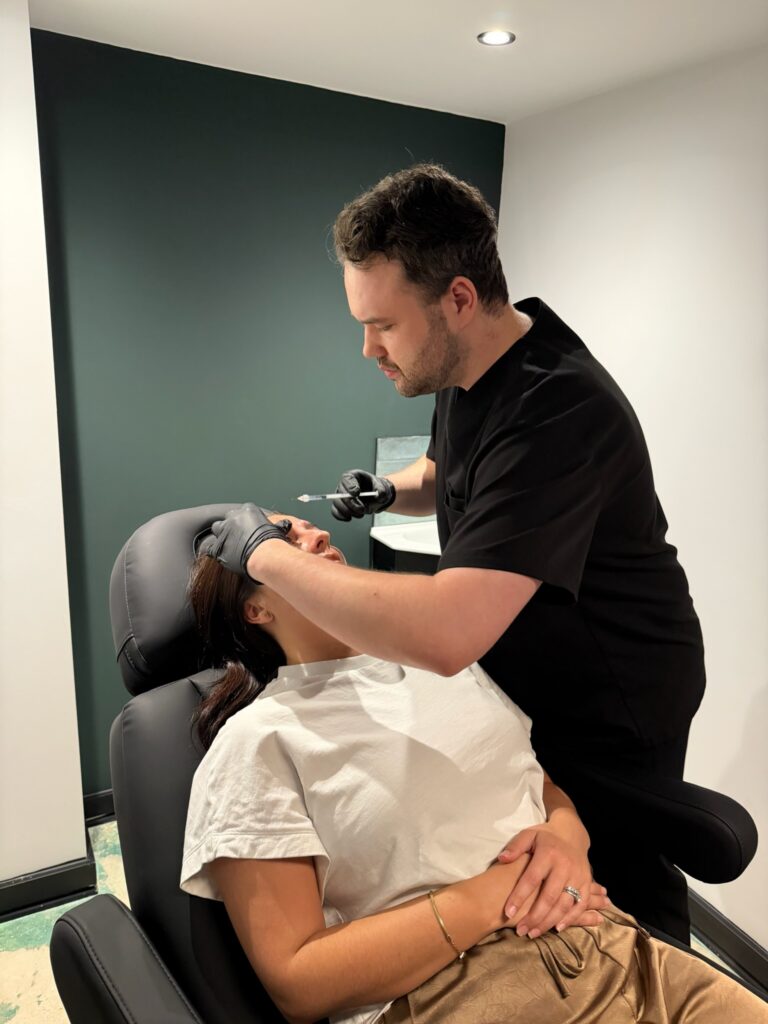
Most people have heard of Botox in Manchester. Far fewer understand what it actually is, where it comes from, or what happens inside the body when it is injected. For a procedure performed millions of times a year worldwide, that knowledge gap is worth closing.
Whether you are considering Botox in Manchester for the first time or simply want to understand the science, this article covers the mechanism, the clinical evidence, and what to look for in a provider.
Botox is a brand name. The active ingredient is botulinum toxin type A, a protein derived from the bacterium Clostridium botulinum. In its natural state, botulinum toxin is one of the most potent biological substances known. In high, uncontrolled doses, it causes botulism, a form of poisoning that produces widespread muscle paralysis.
The clinical version is an entirely different matter. Purified, precisely dosed, and delivered through fine needles into targeted muscles, it produces a controlled and reversible reduction in muscle activity. The FDA first approved it for cosmetic use in 2002. Since then, it has become the most frequently performed non-surgical aesthetic treatment in the world.
To understand Botox, you first need to understand how muscles contract. Every voluntary movement begins with an electrical signal travelling along a motor nerve. When that signal reaches the end of the nerve, it triggers the release of a chemical messenger called acetylcholine. Acetylcholine crosses a tiny gap called the neuromuscular junction and binds to receptors on the muscle, causing it to contract.
Botox interrupts this process at the point of chemical release.
Once injected, the botulinum toxin protein binds rapidly to specific receptor sites on the surface of the motor nerve terminal. It targets cholinergic nerve endings (those that release acetylcholine) and leaves sensory nerves alone, which is why Botox does not affect sensation in the treated area.
Following binding, the nerve terminal absorbs the toxin through receptor-mediated endocytosis. The cell membrane folds inward around the toxin-receptor complex and draws it inside.
The critical step happens once the toxin is inside the cell. The nerve terminal contains a set of proteins called the SNARE complex, which function as the docking mechanism allowing acetylcholine-filled vesicles to fuse with the cell membrane and release their contents. Botulinum toxin type A carries a light chain that acts as a zinc-dependent enzyme. This enzyme cleaves a specific SNARE protein called SNAP-25. Without intact SNAP-25, the vesicles cannot dock or fuse, and acetylcholine stays locked inside the nerve terminal.
The muscle receives no signal to contract. It relaxes. This is a temporary interruption of neurotransmission, not permanent nerve damage. Sensation, blood supply, and the structural integrity of the nerve are unaffected.
Effects develop over 5 to 14 days as sufficient SNARE protein cleavage accumulates, with maximum effect typically visible at around two weeks.
The effects are not permanent. Over approximately three to four months, the nerve terminal recovers. New SNAP-25 proteins are synthesised to replace those that were cleaved. The nerve also sends out small axonal branches that form temporary new synaptic connections while the original terminal regenerates. Gradually, acetylcholine release is restored and muscle function returns.
A study tracking 50 patients over an average of 15 years found no evidence of treatment failure or diminished outcomes with repeated injections, confirming that long-term cosmetic use does not produce cumulative toxicity or loss of efficacy.
Duration varies between individuals. Metabolism, muscle bulk, injection technique, and the specific formulation used all have an influence.
The primary cosmetic applications target dynamic wrinkles: lines formed by years of repetitive muscle contraction. Common treatment areas include forehead lines (frontalis muscle), glabellar lines (the vertical frown lines between the brows, formed by the corrugator supercilii), crow’s feet (lateral lines from the orbicularis oculi), and platysmal bands (prominent vertical cords in the neck).
Botox works best on dynamic wrinkles, those that appear during facial movement. Static wrinkles, visible at rest, may improve over successive treatment cycles as the overlying skin gradually relaxes, though results develop more slowly.
The therapeutic applications extend well beyond aesthetics. Botox is approved for the prophylactic treatment of chronic migraine in patients experiencing 15 or more headache days per month, with clinical trials demonstrating significant reductions in frequency and severity. Intradermal injections reduce excessive sweating (hyperhidrosis) in the axillae for six months or more. In cervical dystonia, injections reduce involuntary neck muscle contractions, improving posture and reducing associated pain. Blepharospasm and hemifacial spasm respond well to treatment. Intradetrusor injection reduces urge incontinence in patients with overactive bladder who have not responded to oral medication. Spasticity following stroke or in patients with cerebral palsy can also be addressed through targeted injection.
The fact that such a diverse set of conditions shares a common treatment reflects the breadth of acetylcholine’s role in the body, and what becomes possible when you can block it precisely.
What to expect from a Botox appointment
A consultation and treatment is typically completed in under an hour. The practitioner assesses facial anatomy, discusses the areas to be treated, and establishes a dosing plan. Injections are delivered via very fine needles, and most patients describe brief, mild discomfort rather than significant pain.
Aftercare is minimal: avoid vigorous exercise, alcohol, and lying flat for several hours after treatment. Results are not immediate. Early changes are usually visible at five to seven days, with full effect at two weeks.
Side effects are generally mild and short-lived. Localised bruising, mild headache, and temporary tenderness at the injection site are the most common. Complications such as eyelid drooping (ptosis) can occur if the toxin diffuses to unintended muscles; correct technique and appropriate dosing by a trained practitioner keep this risk low.
A 2025 CDC case report documented severe illness following self-injection of botulinum toxin purchased online. The point is plain enough: botulinum toxin is a prescription-only medicine and a medical procedure. It requires a qualified practitioner and a licensed, pharmaceutical-grade product.
Manchester has a wide range of practitioners offering Botox, from specialist medical clinics to broader aesthetics settings. The variation in quality is significant.
Confirm that the practitioner is a qualified medical professional: a doctor, dentist, or nurse. In the UK, botulinum toxin is a prescription-only medicine, which means a prescribing consultation is a legal requirement, not optional. Providers who skip this step are operating outside the rules.
Confirm the product being used. Licensed pharmaceutical preparations such as Botox, Azzalure, and Bocouture are manufactured under strict quality controls. The case reports above are a reminder that unlicensed or counterfeit products carry real clinical risk.
Ask about the practitioner’s experience with facial anatomy, their approach to dosing, and the aftercare support they provide. The outcome of a Botox treatment is determined far more by the skill and judgement of the injector than by any particular brand or formulation.
Botox works by blocking acetylcholine release at the neuromuscular junction. The toxin binds to motor nerve terminals, is absorbed into the cell, and its enzymatic light chain cleaves SNAP-25, a protein the cell needs to release neurotransmitters. The muscle cannot contract. Effects develop over two weeks and resolve over three to four months as the nerve regenerates.
It has more than three decades of clinical data behind it, with approved indications spanning cosmetic wrinkle reduction, chronic migraine, hyperhidrosis, cervical dystonia, and more. When administered correctly by a qualified practitioner, the safety profile is well-characterised and the outcomes predictable.
For those exploring Botox in Manchester, the decision worth making carefully is not which clinic offers the lowest price per unit. It is which practitioner has the anatomical knowledge and clinical experience to do the job properly.
Dr Callum Shields, MBChB, is the Lead Clinician at Thriyv a premium, doctor-led aesthetics, wellness, and recovery clinic based in Manchester city centre. All aesthetic treatments at Thriyv are performed within a fully clinical environment, with patient safety and outcome quality at the centre of every decision.