The landscape of wellness and recovery Manchester professionals experience is shifting faster than ever.Manchester has always known how to socialise. From the Hacienda to the Northern Quarter, the city built its identity around nightlife, live music, and bars. A night out was the default. How you unwound, how friendships survived, how stress got managed (or, more honestly, deferred).
That’s changing. A growing number of professionals are swapping the pub for the sauna, the cryotherapy chamber, the 6am fitness class. This isn’t some influencer micro-trend, either. It’s happening across demographics, across income levels, across the city.
A generation ago, wellness in Manchester was basically an afterthought. The city’s social life ran on drinking. Pubs, bars, clubs. That’s where relationships formed and half the business got done. Suggesting a sauna instead of a pint would have earned you a look. Exercise was what you did to offset the weekend, not something you planned your week around.
The drinking habits have shifted faster than most people realise. Research in BMC Public Health found that the proportion of 16-to-24-year-olds in England who don’t drink at all rose from 18% in 2005 to 29% in 2015, with the increase driven largely by people who had never been drinkers in the first place. Meanwhile, the venues are disappearing. The Night Time Industries Association reported that the UK lost 31% of its nightclubs between 2020 and 2023, with northern England hit hardest.
Look at what filled that gap. Saunas, cryotherapy, structured fitness, meditation, Reformer studios, Hyrox gyms and comprehensive wellness facilities like Thriyv. The UK gym market grew to £5.9 billion in 2024, up 9.7% on the year before, with 11.5 million members. Boutique studios specifically are growing at around 15% annually. The Saturday morning gym session is, for a lot of people here, what the Friday pub was ten years ago.
Mental health is probably the biggest driver. Over the past decade, public campaigns and workplace programmes normalised talking about anxiety and stress. Once people started paying attention to their mental health, the habits that actively undermine it got harder to justify. A Cochrane systematic review of 39 trials found exercise produces moderate improvements in depression, with effects comparable to psychological and pharmacological treatments. When the evidence is that blunt, people act on it.
Then COVID forced the issue. Gyms closed. Exercise bike sales in the UK grew over 2,000% between March and July 2020. Downloads of the top English-language mental wellness apps surged by 2 million in April 2020 alone. A lot of professionals used the disruption to rethink how they actually spent their time. For many, the old routines just never came back.
Wearables played a quieter role. 40% of UK consumers now have access to a smartwatch or fitness tracker, adopted as quickly as smartphones were after the iPhone launched. Apple Watch, Oura Ring, Whoop. When you can see on your wrist what a late Wednesday night did to your Thursday, the feedback is hard to ignore.
Employers are paying attention too. The CIPD Health and Wellbeing at Work report found sickness absence has hit 9.4 days per employee per year, the highest in over 15 years. Organisations that support homeworking report decreased absence at more than double the rate of those seeing increases. 57% of organisations now have a formal wellbeing strategy, up from 44% five years ago. The Deloitte 2022 Gen Z and Millennial Survey found work/life balance and wellbeing were among the top reasons these generations choose or leave jobs. That’s not a blip. It shows in how people spend.
So what’s actually replaced the post-work pint for wellness and recovery Manchester? It’s not one thing.
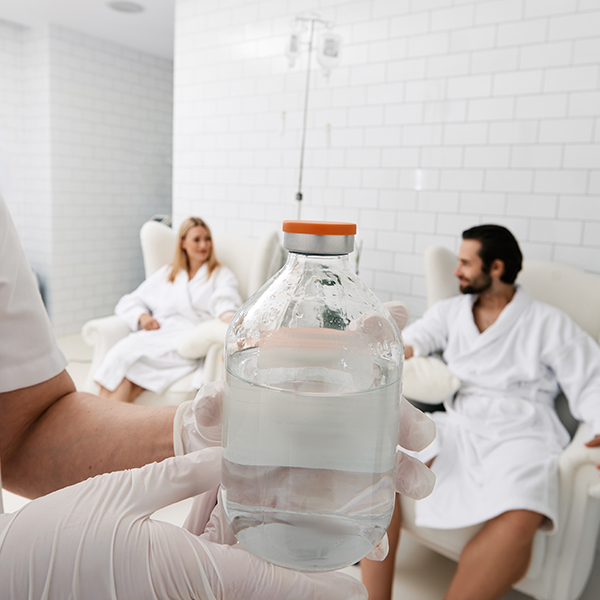
For some people it’s an IV vitamin drip on a lunch break. Forty minutes in a chair, a cocktail of B12 and magnesium going straight into your bloodstream, and you walk back to your desk feeling like you slept ten hours. For others it’s cryotherapy, three minutes at minus 80 and the stress from your day just isn’t there anymore. Some people stack these with a gym session or a stretch class. Others do them on their own as a standalone reset.
The social side is maybe the most surprising part. Groups of colleagues booking recovery sessions together. Friends meeting for a Saturday morning sauna instead of a Saturday night out. You’re still decompressing with people you like, except you feel better afterwards instead of worse.
Sleep has entered the conversation too. People who never thought twice about it are tracking their sleep scores and adjusting their evenings around them. It sounds obsessive until you try it. A few weeks of genuinely good sleep and you get why people won’t shut up about it.
People are choosing things that make them feel noticeably, physically better. Not in a vague long term way. Today. And that immediacy is what makes these habits stick in a way that gym-guilt never did.
Walk through Deansgate or the Northern Quarter and you can see it at street level. Cryo studios, saunas, recovery centres, meditation spaces, all promoting wellness and recovery in Manchester.
Manchester now has the largest professional and business services sector outside London, with around 250,000 jobs in the extended city centre and employment growth running at over 4% a year. That’s a huge pool of professionals whose spending habits shape what the city looks like. And increasingly, that spending is going toward wellness rather than nights out.
The UK wellness economy hit $224 billion in 2022 according to the Global Wellness Institute, reaching 131% of its pre-pandemic value, the fastest recovery rate of any country globally. As the market grows, access is widening. More facilities means more competition, more price points, more options in more parts of the city. What started among early adopters is filtering out. Manchester is further along that curve than most UK cities.
This isn’t going anywhere. The demographics, the economics, the tech, the values all line up to supercharge wellness and recovery in Manchester.
Manchester has always been good at reinventing itself. And this time, it’s just people, one by one, deciding they’d rather feel good than not. That’s a hard thing to reverse. To learn more about what Thriyv offers to help you look after yourself click here.
Don’t just live – Thrivy!
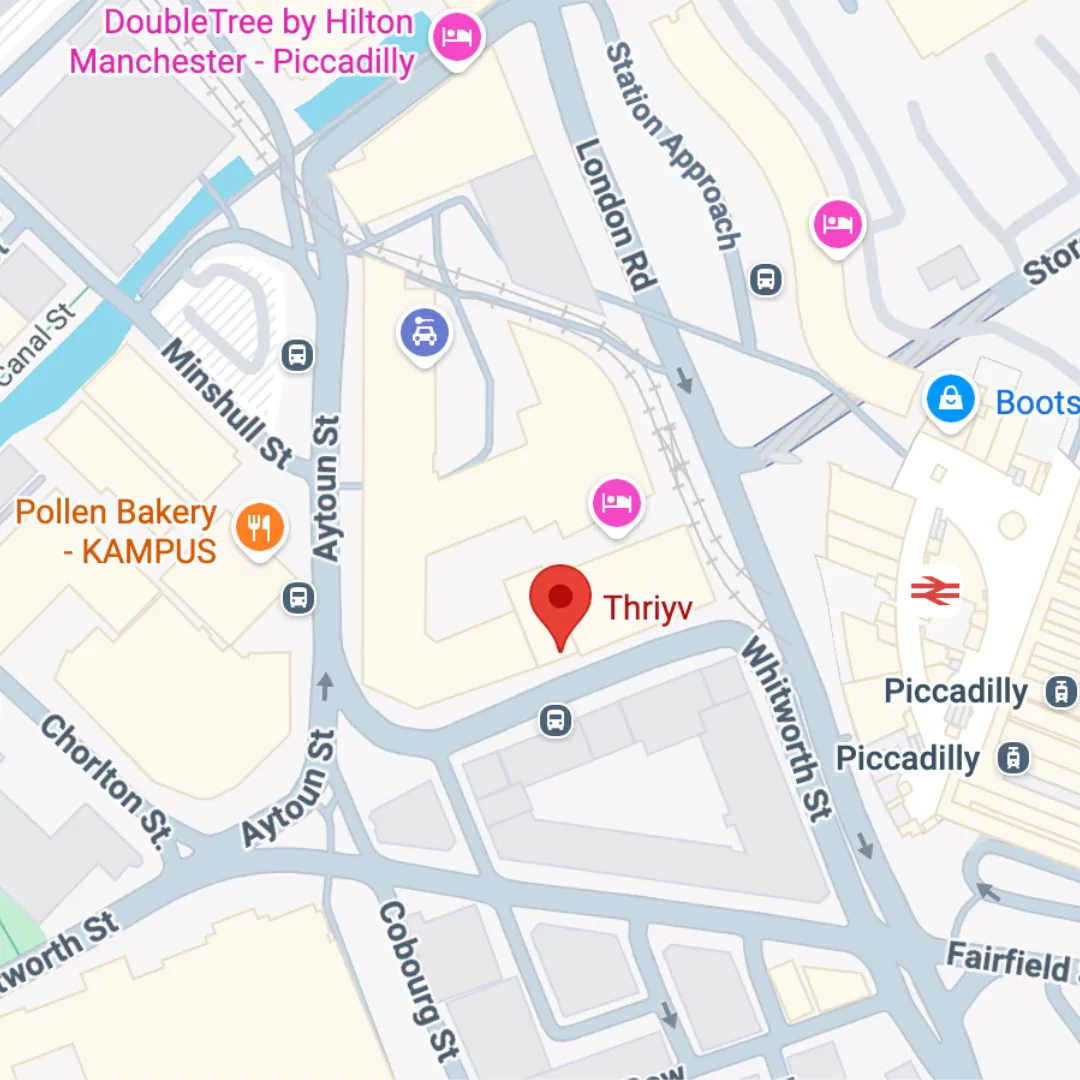
Thriyv Wellness & Aesthetics is located in the heart of Manchester City Centre, right between Manchester Piccadilly Train Station and Kampus.
We’re just a few moments walk from major rail, tram and bus hubs, with a multi-story carpark next door. This means its never been easier to start your journey at Thriyv, whether you’re based in Manchester City Centre or travelling from further afield.
Our full address is Thriyv, 14-16 Whitworth Street, Manchester, M1 3BS. See you soon!
Ready to take control of your aesthetic and wellness journey?
Thriyv, and our medical professionals, are ready and waiting to support you in reaching your goals.
To begin, book your next service/treatment below!
We get it. Sometimes you want to learn a bit more about a service without the hassle of an in-clinic consultation.
If you’d like to learn more about how Thriyv’s unified and complimentary services can help you achieve your goals, drop us a line via the form below. One of the Thriyv team will be back in touch with you as soon as possible!
Please note: Unfortunately from time-to-time, our correspondence can land in your spam inbox. To make sure we can answer your query, please consider saving info@thriyv.co.uk in your contacts, or remember to check your spam regularly!