

Zone 2 training is one of those concepts that sounds simple but often gets overcomplicated. At its core, Zone 2 is moderate-intensity aerobic exercise where your heart rate sits at 60-70% of your maximum. It feels easy. You can hold a conversation. And that simplicity is exactly why it works.
Zone 2 refers to the second of five heart rate training zones. It is characterised by steady, sustainable effort where your body primarily burns fat for fuel rather than carbohydrates. During Zone 2 exercise, you should feel like you could continue for an hour or more without significant fatigue.
The simplest test is the talk test. If you can speak in full sentences without gasping for breath, you are likely in Zone 2. If you can only manage a few words, you have pushed into Zone 3 or higher
The most common method uses this formula: 220 minus your age gives your estimated maximum heart rate. Multiply that by 0.60 and 0.70 to get your Zone 2 range.
Example for a 40-year-old:
This means a 40-year-old should aim for 108-126 beats per minute during Zone 2 training.
However, individual variation is significant. A 2025 study of 50 cyclists found that Zone 2 markers vary by 6-29% between individuals when using standardised percentages of maximum heart rate. The researchers concluded that personalised Zone 2 prescriptions based on physiological measurements may provide a more accurate approach than generic formulas.
If you do not have a heart rate monitor, the talk test remains a reliable guide.
Lorem ipsum dolor sit amet, consectetur adipiscing elit. Donec vulputate ipsum sed ex lacinia, at ultrices arcu suscipit. Sed eget tincidunt lacus, eu malesuada lectus. Phasellus lobortis tempus lectus, ac ornare velit placerat ac.
At Zone 2 intensity, your body operates primarily on aerobic metabolism. This means your muscles use oxygen to break down fat for energy, sparing your glycogen stores for higher-intensity efforts.
Two key adaptations occur with consistent Zone 2 training:
Fat oxidation improves. Your body becomes more efficient at using fat as fuel, which is particularly valuable for endurance activities and metabolic health.
Mitochondrial function increases. Mitochondria are the structures inside your cells that produce energy. Zone 2 training stimulates them to work more efficiently, though this effect is more pronounced with sessions lasting 60-90 minutes.
Research on triathletes found that athletes who spent more than 20% of their training time in Zone 2 showed significantly greater improvements in aerobic capacity. The high-Zone 2 group dedicated 24.7% of their training to this zone, compared to 11.8% in the low-Zone 2 group.
Builds your aerobic base. Zone 2 develops the foundation that supports all other training. A stronger aerobic base means you can sustain harder efforts for longer.
Enhances fat metabolism. Training at this intensity teaches your body to burn fat more effectively, preserving carbohydrate stores for when you need them.
Supports recovery. Zone 2 sessions place less stress on your muscles and joints than higher-intensity work. They can be used as active recovery between harder training days.
Reduces injury risk. The lower intensity means less mechanical stress, making it a sustainable option for consistent training.
Improves cardiovascular health. Regular aerobic exercise strengthens your heart and improves circulation, with benefits extending beyond athletic performance.
Choose your activity. Zone 2 works with any cardiovascular exercise: walking, jogging, cycling, swimming, rowing, or using an elliptical. The key is maintaining your target heart rate.
Start with 30 minutes. If you are new to structured training, begin with 30-minute sessions two to three times per week.
Progress to 60-90 minutes. Longer sessions maximise the mitochondrial and fat-burning benefits. Aim for at least one longer Zone 2 session each week.
Use the 80-20 rule. Many endurance athletes spend approximately 80% of their training time at low intensity (Zones 1-2) and 20% at higher intensities. This polarised approach builds a strong aerobic base whilst still developing speed and power.
Be patient. Zone 2 adaptations take time. Expect noticeable improvements after 6-8 weeks of consistent training.
Zone 2 training is straightforward: exercise at 60-70% of your maximum heart rate, or at an intensity where you can comfortably hold a conversation. The science supports its value for building aerobic capacity, improving fat metabolism, and supporting long-term health.
Calculate your personal Zone 2 range using the 220-age formula, then choose activities you enjoy. Start with 30 minutes and progress towards longer sessions as your fitness improves. Be consistent, be patient, and let the adaptations build over time.
Zone 2 may not be glamorous, but it works.
If you’re someone that spends time Zone 2 training, then you’ll understand recovery is key.
Thriyv Manchester offers a variety of recovery and rejuvenation services aimed at helping you bounce back from training faster!
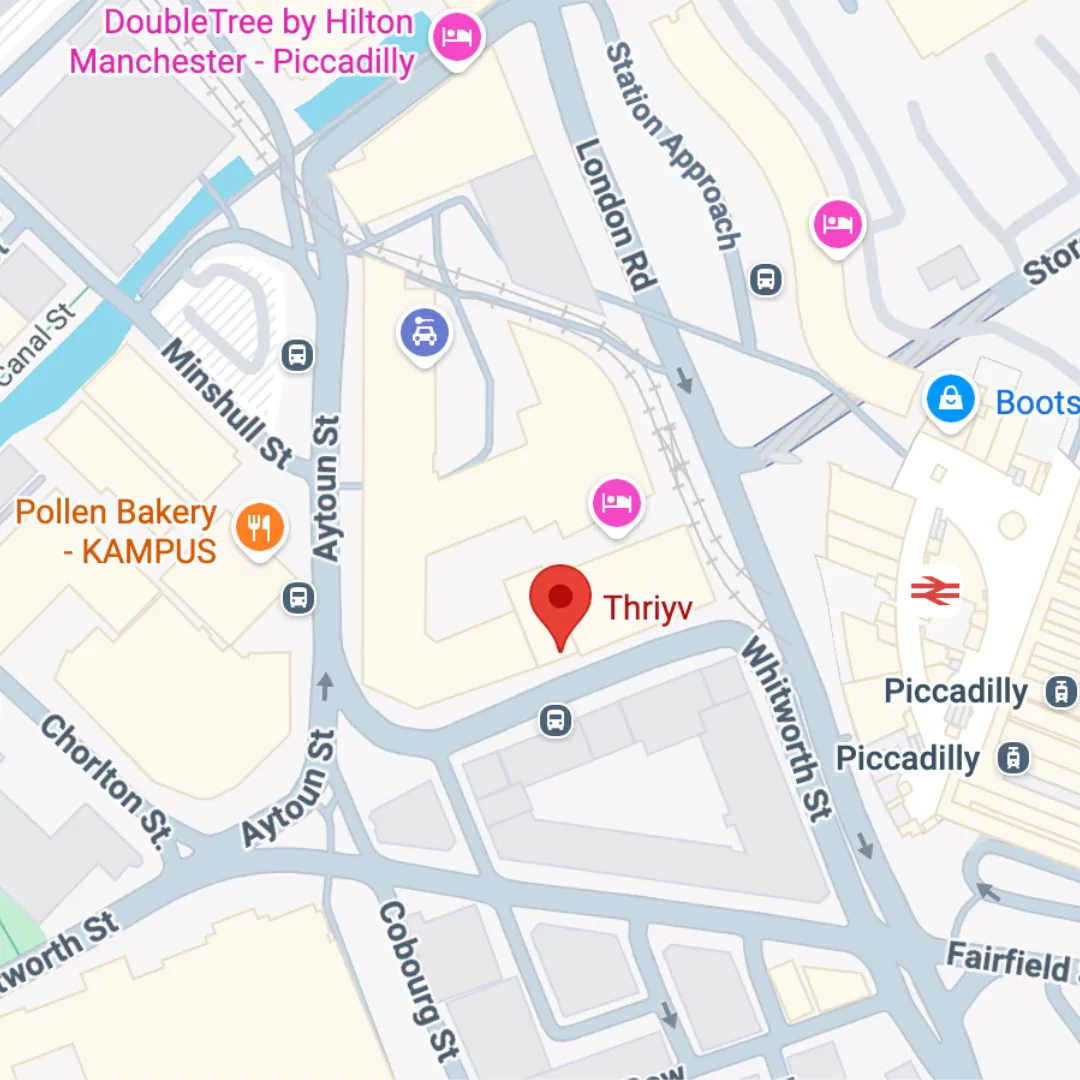
Thriyv Wellness & Aesthetics is located in the heart of Manchester City Centre, right between Manchester Piccadilly Train Station and Kampus.
We’re just a few moments walk from major rail, tram and bus hubs, with a multi-story carpark next door. This means its never been easier to start your journey at Thriyv, whether you’re based in Manchester City Centre or travelling from further afield.
Our full address is Thriyv, 14-16 Whitworth Street, Manchester, M1 3BS. See you soon!
Ready to take control of your aesthetic and wellness journey?
Thriyv, and our medical professionals, are ready and waiting to support you in reaching your goals.
To begin, book your next service/treatment below!
We get it. Sometimes you want to learn a bit more about a service without the hassle of an in-clinic consultation.
If you’d like to learn more about how Thriyv’s unified and complimentary services can help you achieve your goals, drop us a line via the form below. One of the Thriyv team will be back in touch with you as soon as possible!
Please note: Unfortunately from time-to-time, our correspondence can land in your spam inbox. To make sure we can answer your query, please consider saving info@thriyv.co.uk in your contacts, or remember to check your spam regularly!